Complexity Management
The complexity of an information system is not always a necessary consequence of its size or functionality. More often, it emerges from accumulated design decisions, unnecessary layers of abstraction, duplicated components, hidden dependencies, and architectural compromises that gradually outlive their original purpose.
At AstraVerge, we approach complexity management as the search for the simplest architecture capable of fulfilling the system's objectives. We examine which elements are truly essential, which can be simplified or eliminated, and how complexity can be reduced without sacrificing functionality, flexibility, or future evolution. Simplification is not merely about reducing the number of components—it should also improve reliability, transparency, and overall system manageability.
Simplification Without Compromise
We do not reduce complexity management to simply removing components. Our goal is to eliminate unnecessary complexity while preserving essential functionality, architectural flexibility, and the system's ability to evolve.
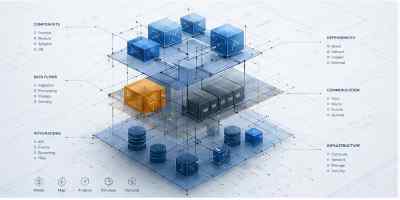
What We Study
System architecture, component relationships, abstraction layers, duplicated functionality, hidden dependencies, technical debt, and the underlying causes of unnecessary complexity.

The Human Factor
Complexity exists not only in code and infrastructure but also in processes. We assess how understandable a system is for developers, operators, and decision-makers, and how much effort is required to maintain and evolve it.

What We Assess
The soundness of architectural decisions, the quality of system decomposition, the number of dependencies and intermediate layers, the cost of change, operational complexity, and the impact of architecture on system reliability.
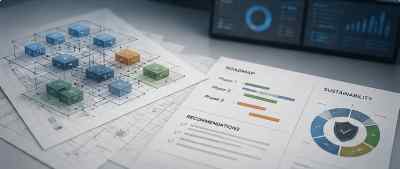
Outcome
Practical recommendations for simplifying architectures and processes, eliminating unnecessary components and dependencies, preserving essential functionality, and improving system reliability and manageability.
When It Becomes Necessary
Excessive complexity rarely results from a single decision. It usually accumulates over time as systems evolve: new components are added, temporary integrations become permanent, the same functionality is implemented in multiple ways, and local optimizations gradually make the overall architecture more difficult to understand and maintain. Eventually, every change becomes more expensive, while system reliability increasingly depends on the knowledge of a few key individuals.
Common Signs
- Even simple changes require coordination across multiple teams.
- The purpose of individual components is no longer clear.
- The same functionality has been implemented in several different ways.
- The number of integrations and intermediate layers continues to grow.
- Removing or replacing a component is considered too risky.
- The system relies heavily on undocumented knowledge held by a few specialists.
What Clients Gain
- A clear map of the sources of unnecessary complexity.
- A distinction between essential and avoidable complexity.
- Options for simplifying the architecture without losing functionality.
- Recommendations for eliminating duplication and hidden dependencies.
- Lower maintenance and change costs.
- Improved reliability, transparency, and system manageability.