AI and Knowledge Management
Modern artificial intelligence is becoming more than a tool for automation. It is transforming how organizations capture, organize, retrieve, and apply knowledge to support decision-making. The effectiveness of AI, however, depends not only on the quality of the model itself, but also on how data, context, and knowledge workflows are structured.
At AstraVerge, we approach artificial intelligence as both an engineering and a research discipline. Rather than simply applying existing models, we study the principles behind them: neural network architectures, training and fine-tuning methods, knowledge representation, memory and context management, and the interaction between AI models and external systems. We design solutions in which AI becomes an integral part of a unified information environment rather than an isolated service.
Research Before Implementation
We view artificial intelligence as part of a broader knowledge architecture. The choice of model, training strategy, context management, and system integration is driven by the problem to be solved—not by the popularity of a particular technology.
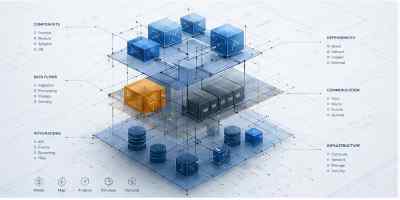
What We Study
Large language model architectures, knowledge representation, machine learning methods, context management, AI integration into enterprise systems, and the interaction between AI models and organizational data.

Practical Applications
We deploy modern open-source models, adapt and fine-tune them for specific domains, develop specialized AI solutions, implement RAG and agent-based systems, and build knowledge management platforms.

What We Assess
Data quality, contextual completeness, training effectiveness, model performance, operational cost, response quality, information security, and compliance with organizational requirements.

Outcome
Intelligent systems capable of working with enterprise knowledge, understanding context, automating information processing, and integrating seamlessly into existing architectures without compromising governance or security.
When It Becomes Necessary
As the volume of information continues to grow, storing documents and databases is no longer enough. Organizations need to retrieve knowledge efficiently, preserve context, leverage accumulated expertise, and integrate intelligent information processing into existing business processes. At this point, artificial intelligence becomes part of the organization's architecture rather than just another application.
Common Signs
- Knowledge is scattered across multiple systems and documents.
- Employees spend significant time searching for information.
- Off-the-shelf AI services do not meet the organization's specific needs.
- Local deployment of AI models and full control over data are required.
- Enterprise knowledge needs to be combined with the capabilities of large language models.
- There is a growing demand for intelligent assistants and agent-based systems.
What Clients Gain
- Selection of the most appropriate AI architecture.
- Deployment of modern open-source AI models.
- Fine-tuning and adaptation of models for specific domains.
- Implementation of RAG, agent-based systems, and intelligent search.
- Integration of AI with enterprise data and business services.
- A research-driven approach to building and evolving intelligent infrastructure.